
Allison interviews Brian Feeser from Cearvol about their over-the-counter hearing aids which are a more affordable option to traditional hearing aids.
Brian first shows the Cearvol’s Nano hearing aids, which are their simplest and easiest to use design – they don’t require an app or smartphone to use. The Nanos look like normal earbuds and come with a rechargeable case that includes a built-in sterilization feature. All controls are from the charging case itself, including volume control.
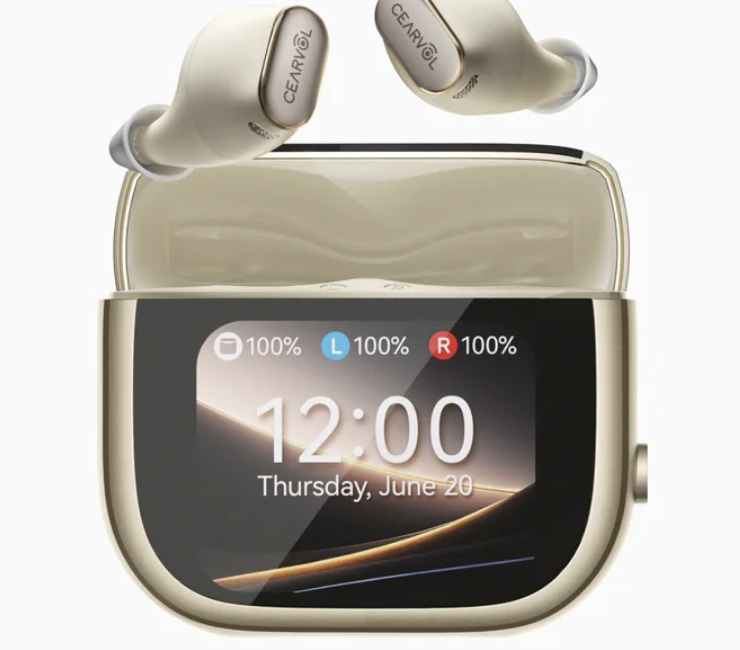
Brian then moves on to Cearvol’s Wave, their higher-end hearing aids that are app-controlled. The Waves include a charging case with a smart-touch screen that shows hearing aid charging status. Using the case, you can adjust volume and change hearing mode, such as normal conversation or restaurant background noise. With the Cearvol’s companion app, you have full control of the hearing aids, including smart noise control and personalized sound settings. You can also stream audio and music to the Waves through a Bluetooth connection.
Brian concludes with Cearvol’s newest product, which is a pair of glasses that includes hearing aids mounted on each stem. These aids have the advantage that they are not mounted in the ear canal, which can occlude unamplified sound from entering the ear and cause unwanted side effects. Instead, they have an open-ear design where the compact hearing aids swivel down from the stem into a position directly forward of each ear. The microphones are embedded into the forward portion of the glasses’ stems. This is an ideal solution for people who are concerned about the perceived stigma of wearing hearing aids.
Learn more at https://www.cearvol.com/
Using a Screen Reader? click here
Transcript of Interview:
Allison: A lot of people have somewhat minor hearing loss, but could really benefit from hearing aids. But hearing aids are incredibly expensive, and the great thing is that over-the-counter hearing aids have become all the rage these days and become legal in the United States at least for us to be able to have those, which is a great thing. So I’m here with Brian Feeser of Cearvol, who’s going to talk to us about their over-the-counter hearing aids.
Brian: Yep. So they’ve been out for what, about a year now? The, like you were saying, the nice thing about over-the-counter is they’re actually affordable. People have been paying, you know, thousands of dollars for a very long time. And then a few years ago, FDA cleared over the counter, and here you go. So we have a couple of products here ranging from, you know, $300 hearing aids. These don’t connect to your phone or anything like that. This is more of the simplicity. A lot of people that don’t want too many options or don’t want to mess around with the phones, this would be perfect for them. They’re really simple to use. You just pop them in your ears and wear them.
Allison: So are they app-controlled or no?
Brian: Nope, not these ones. But all the other hearing aids are app-controlled, so you can hook them up to your phone. You can make adjustments, there’s an equalizer. You can stream, you know, if you’re watching a YouTube video or listening to a podcast. You can actually get the audio to play through the hearing aids, so that’s really nice.
Allison: Okay. So what about these higher-end ones?
Brian: So these, all of these are basically rechargeable cases, so there’s a built-in battery.
Allison: It’s got a cool display on the front.
Brian: Yep. So this allows you to adjust the volume of the hearing aids, change the programs, change the modes. So you can have them in conversation mode or restaurant mode if there’s a lot of noise background.
Allison: And you actually use the case to do it.
Brian: Mhm. Yep. Oh wow. So yep, it’s got a built-in battery. It will recharge the hearing aids and you can also, let’s see.
Allison: Okay, swiping up on an LCD screen.
Brian: There you go. So it shows the battery level of the hearing aids, which is pretty cool.
Allison: It’s a beautiful display on the side of it. That’s fantastic.
Brian: Yep, really, really nice. And then even these here.
Allison: I’m going to walk, come around front here. Your arms are never going to be long enough to make it to the end of the table.
Brian: Yep, even these. Even the basic hearing aids, the case actually doubles as a volume control as well, which is pretty cool.
Allison: Okay.
Brian: And that’s not something you see in a lot of the over-the-counter hearing aids.
Allison: Right, right. So now I see a pair of glasses here with hearing aids on them.
Brian: Yep. So these are called, these are open ear technology. One thing that’s really unique about these and something a lot of folks don’t think about is occlusion. So when you wear a hearing aid like one of these, they fully occlude your ear canal. So they plug up your ears. You feel like you’re plugged up. Your own voice sounds really strange. Sorry. Your own voice sounds really strange. There’s just a lot of side effects that come with plugging up or occluding your ears. So these, nothing actually goes in the ear.
Allison: So what we’re looking at is a pair of glasses that have just kind of a diagonal piece in front of the ear.
Brian: Yep, and this moves. This is actually the speaker.
Allison: Oh, and it rotates.
Brian: Yep. So when you put them on, the speaker actually delivers all the sound and nothing’s actually going into your ear canal.
Allison: Interesting. So it’s not bone conducting or anything like that, but it’s just sitting right in front.
Brian: Yep, it’s air conduction.
Allison: So where is it sensing the sound from?
Brian: The microphones are right around here.
Allison: In the stem of the glasses.
Brian: Yep. And then it amplifies it, plays it through the ears.
Allison: That’s actually kind of cool looking. I like that.
Brian: And there’s obviously a stigma with hearing aids. So folks that don’t want people to think they’re wearing hearing aids or just don’t want to come to terms with it, they can use something like that.
Allison: If they’re willing to wear glasses.
Brian: Right.
Allison: I’ve never understood why hearing aids have a stigma but glasses don’t.
Brian: Exactly.
Allison: They’re assistive devices. Get over it, you know? Come on. Everybody wears them.
Brian: Exactly
Allison: So was there something you were going to let me do a demo of while we’re doing the…
Brian: Yeah, yeah, you can actually try these. You can try…
Allison: All right, let’s try the glasses. Okay. And you’ve got something that’s going to play audio to me?
Brian: Well, they’re already on right now.
Allison: Oh, they’re turned on. Yep. I’m putting on the… Oh wow. Oh my goodness. Yeah, this is kind of wild. I’m definitely hearing, I’m hearing me. Why don’t you guys talk?
Brian: Yeah, so it’ll be noisy.
Allison: It’s pretty noisy.
Brian: So one thing that folks that wear hearing aids, not complain about, but they notice right away is the sound of their own voice. And it takes a while to get used to. It’s strange for sure, but it gets easier over the next couple weeks. But you’ve got to wear them consistently and it is strange.
Allison: Luckily as a podcaster, I monitor my own voice, so I’m actually kind of used to it. So I’ve heard this before. It seems to be jumping, yeah, I’m hearing more directional voices, but it seems to be jumping ear to ear. I’m hearing this ear and then this ear and this ear and this ear.
Brian: So the batteries might be getting low. They’ve been on.
Allison: Yeah, that might be it. Yeah, because it’s a little more in the right ear than you’ve been demonstrating all night. We’re catching these guys 10 minutes before the show floor ends. Well, this is very cool. So if people want to learn more about Cearvol, where would they go?
Brian: Cearvol.com.
Allison: And can you spell that for us?
Brian: Yep, c e a r v o l.com.
Allison: Very good. Thank you. Thank you very much, Brian. Appreciate your time.
Brian: No problem.