
Allison interviews Steven Bardey from Aerleum about their hardware and processes that convert chemicals found in ordinary air to usable fuels.
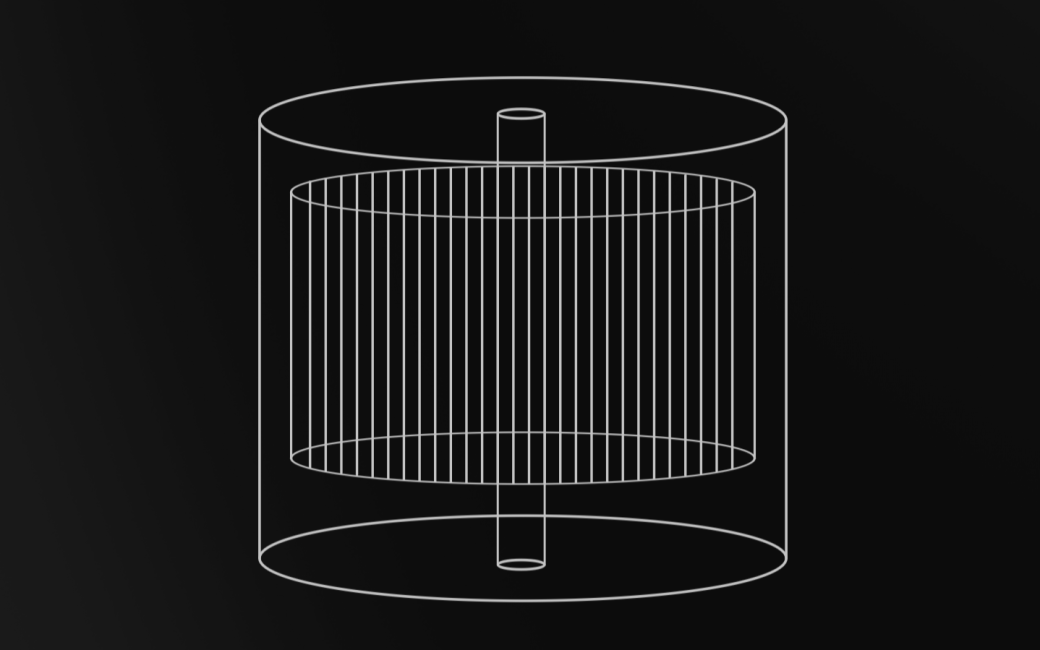
Using a mockup, Steven explained how an Aerleum reactor can take CO2 out of the air and combine it with green hydrogen (H2) to make methanol.
The cost of producing methanol using the Aerleum process is comparable to the prices of fossil methanol. However, Aerleum processing yields a 20 times lower carbon footprint than coal-based methanol and is 35% more energy-efficient than traditional processes.
Currently, Aerleum is making approximately 100 kilos of methanol per month, capturing around 140 kilos of carbon. The next step in Aerleum’s development is to scale up with a modular pilot program at ton scale.
Learn more at https://www.aerleum.com/
Using a Screen Reader? click here
Transcript of Interview
Allison: All right, so this booth looks super nerdy. We’ve got a bunch of pipes. We’ve got some chemicals on them here. We’re not really sure what we’re looking at. We’ve got some fun meters. So Steve and I, being nerds, we had to stop by as engineers. I’m here with Steven Barty, and the company name is…
Steven: Aerleum.
Allison: Aerleum. And what is this contraption representing here?
Steven: So at Aerleum, what we are doing is making fuels out of air. So here, what you can see is our reactor containing our patented material. And this reactor is able to catch the CO2 and transform it directly into different kinds of fuels. And the first fuel we are doing is called methanol.
Allison: Methanol? Oh, okay.
Steven: And methanol is used to power, for example, ships. It’s also used to make sustainable aviation fuel. And it’s also a building block for the world chemical industries, making plastics, paints, solvents, all that kind of crucial commodities.
Allison: Okay, so air. Now, is this a simplification I’m looking at here, or is this really representative, before I describe it?
Steven: It’s a kind of simplification, but more or less…
Allison: Because we have a very small pipe that says air.
Steven: Yeah.
Allison: And it travels down, and we got a couple of little meters here, and then powered by air, and then magic happens, and it’s methanol.
Steven: Exactly.
Allison: I think there’s probably a little more to it than that.
Steven: Yeah, it’s a bit simplified, but… Basically, what happens is air is going through a larger pipe than this one, inside the reactor. Then the CO2 is trapped by our material. You can figure it as a sponge. So air passes through the sponge. The CO2 is trapped by the sponge. The rest of the air is released in the atmosphere. So air without CO2 is released in the atmosphere. Once we have saturated our sponge, so our sponge cannot take more CO2, we stop everything. We stop flowing air. We flow hydrogen, which is the reactant that will react with the CO2. We heat up the reactor, and magic happens at the surface of our sponge, the reaction.
Allison: Maybe I could call it patents happen.
Steven: Sorry?
Allison: Patents happen.
Steven: Exactly. Exactly.
Allison: This is in the reactor you’re talking about, right?
Steven: Yeah. Actually, this one is the reactor we have in our lab to make our optimization on material, etc. But the one we are building right now in our company in Paris is Humantol.
Steve: Okay. Where does the carbon go?
Steven: Sorry?
Steve: Where does the carbon go from the CO2?
Allison: Where is the carbon? The C in CO2. Where does the carbon go?
Steve: I see. Is there carbon in this?
Steven: Yes.
Steve: Okay.
Steven: It’s CH3OH. Methanol is the first alcohol you can do.
Allison: Okay. Steve, you explain the answer. What he said to me.
Steve: Methanol has carbon as part of it.
Allison: Okay. So carbon is not a byproduct. It’s part of the part of methanol.
Steven: Exactly. Carbon is trapped inside the methanol.
Allison: You didn’t have enough… So ME is what confuses this. ME is not a chemical. So you didn’t have enough room. We’d have to walk all the way around to read the label if it had the CH3.
Steven: ME is for methyl actually. And methyl is CH3.
Allison: Okay. Okay.
Steven: That’s why.
Allison: Okay. There we go.
Steven: That’s how chemists.
Allison: This sounds like it’s going to solve the problems of the world.
Steven: Yeah. It’s good. We just need to scale up the technology. Right now we are making 100 of kilos per month of methanol. So 100 kilos per month of products means we capture 140 kilos of CO2 in the atmosphere. So it’s already kilos. But it’s not enough to solve our big problem. But yeah. As I mean once we will be at full scale that could change the way we produce commodities.
Allison: So how much energy do you have to put into this to cause this to work?
Steven: Actually this process is one of the most let’s say efficient process we have in this domain. We achieve 55% energy efficiency. So it’s the energy we put inside this process. We recover more than the half at the end with the power of the methanol itself.
Allison: So are you energy neutral or are you putting more energy in? You need to be getting the energy from somewhere.
Steven: You always more or less always put more energy than you recover.
Allison: That was a test.
Steven: Yeah. Because it’s more or less like for example a thermal engine. I think it’s below 30% the energy efficiency. Here we go up to 55% because of this patented material which can combine different steps. So we remove a lot of energy intensive steps that are actually used in the industry. In this industry. So that’s why we are the best in that market.
Steve: Do you have a method for using the methanol to power this?
Steven: Not yet but actually that’s a good idea.
Allison: Very good. Very good. So if people want to learn more about what you’re doing I’m guessing this is not a product on the market. But if they’re interested in this where would they go?
Steven: They can have a look at our website www.aerleum.com
Allison: And Aerleum is spelled A-E-R-L-E-U-M.com
Steven: Yeah. Actually it’s like petroleum but we remove petrol which is taking the carbon in the earth with air. And here it’s A-E-R, Greek or Latin base.
Allison: Very good, very good. Well thank you very much. We all wish you the best of luck.
Steven: Thank you so much.
Allison: Cause we need it.
Steven: Yeah. Thank you so much.
Aerleum’s innovation Geometry Dash suggests that sustainable methanol production from captured CO₂ could become a practical alternative to fossil-derived fuels if the planned scale-up proves successful.